
Successful business owners and senior leaders: saying yes to everyone has a price, and you are the one paying it.
People-Pleasing Coaching for Senior Leaders and Founders Whose Priorities Have Been Upside Down for Too Long
You are not being kind. You are running an outdated pattern that's hurting you.
A private, no-pressure conversation about where the pattern came from, and what changing it would involve.
- Free
- 20-30 minutes
- No obligation

The short answer
What does people-pleasing coaching actually change?
People-pleasing coaching resolves the deep need for approval that drives over-committing, conflict avoidance and saying yes when you mean no. It is for leaders whose likeability has become a liability. Using the Rewire Method™, it rebuilds the self-worth underneath, so boundaries feel natural and you lead without needing everyone’s approval.
Credentials
- 1,000+ Clients rewired and transformed
- Creator of the trademarked Rewire Method™
- 6 Disciplines in one practitioner
- Leadership Rewiring Specialist, Executive Performance Coach and Master Hypnotherapist
About this work
What people-pleasing coaching for leaders and business owners actually addresses senior leaders and business owners actually addresses
People-pleasing coaching for business owners addresses the unconscious wiring that puts other people’s comfort, approval, and expectations before the owner’s own needs, decisions, and direction, and changes that wiring permanently. Nicky Anstey works with high-achieving business owners and senior executives as an Executive Psychotherapist and Master NLP Transformation Coach, using the REWIRE Method™ to remove the root of people-pleasing rather than simply teaching behavioural workarounds. If you are constantly saying yes when you mean no, managing everyone else’s experience of you, and working twice as hard to compensate for something you cannot quite name, this is the page for you.
To understand where you are on the scale, visit the Diagnosis Room and take the people pleasing assessment to learn more about yourself and what it’s costing you.
The beliefs and pattern underneath
The people-pleaser in business does not look like what you expect
People-pleasing in a business owner does not look like weakness. It does not look like someone who cannot make decisions. It looks like someone who is extremely good at managing other people’s experience of them. It looks like availability, responsiveness, warmth. It looks like someone who is always there for the team, always willing to accommodate the client, always going the extra mile.
From the outside, it looks like exceptional leadership. From the inside, it is exhausting.
The people-pleaser in business has an inverted priority pyramid. Their own needs, their own boundaries, and their own strategic direction sit at the bottom, quietly getting crushed under the weight of everyone else’s needs at the top. They say yes to things they should say no to, because the anxiety of saying no is unbearable. They accept terms that do not serve them, because the confrontation required to renegotiate feels worse than the loss. They absorb the emotional weather of everyone around them, taking responsibility for moods and reactions that have nothing to do with them.
And because they are high achievers, because they are strong, they carry this for an extraordinarily long time without it becoming visible. This is part of what I call the curse of the strong. The very capacity to endure is what allows a damaging pattern to persist unchallenged for years, sometimes decades.
To understand where you are on the scale, visit the Diagnosis Room and take the people pleasing assessment to learn more about yourself and what it’s costing you.
How the work moves
How People-Pleasing Coaching Works
The REWIRE Method™ starts with a diagnostic process that maps the exact wiring underlying the people-pleasing pattern. This matters because the wiring is personal. The specific experiences that built it, the specific beliefs it is running on, the specific situations in which it is most active, these vary from person to person, and the rewiring needs to be built around the actual map rather than a generic one.
Reveal the limiting beliefs and patterns
We identify the exact unconscious programme producing people-pleasing in your specific situation, where it came from and why it still runs.
Rewire the root
Using NLP, hypnotherapy and psychotherapy, the pattern is changed at the neurological root, not managed on the surface.
Rebuild in real life
We rebuild the leadership behaviours, wiring, decisions and daily habits around the new, lower-people-pleasing baseline so the change holds.
- They start saying no.
- The business effects are rapid and often striking.
- And the internal experience changes in a way that is difficult to overstate.
Your Yes Should Mean Something
Stop saying yes when you mean no. We rewire the pattern at the root.
Book Your Reset CallFit check
Is This Reset Call Right For You?
This call is for you if you are…
- A high-earning, established business owner or senior leader, already performing at a level others assume is fine.
- Finding that the pressure has grown in step with the responsibility.
- Agreeing to things you already resent before the sentence is finished.
- Putting everyone else’s priorities above your own by default, then resenting that too.
This call is not for you if you are…
- Not willing to invest anything in yourself yet.
- In genuine financial difficulty. This is not the right time.
- In middle management, unless you are personally committed and ready.
- Running an early-stage business with no development budget.
If the second column sounds more like your situation, there is lower-cost support in The Reset Room.
Testimonials
What others are saying
These clients were once where you are now: carrying more than they let on, and unsure what actually needed to change.
-
“I was feeling completely lost, overwhelmed, burnt out, totally trapped and stuck in my life and unable to move forward… now I can push through any discomfort that comes up, I trust in my ability, and it’s just really great to feel like I’ve got my life back and enjoy living it again.”
-
“Nicky helped me let go of limiting beliefs and lead with confidence – personally and professionally. Truly life-changing.”
-
“I was in a difficult place with a certain level of emptiness… I spent seven weeks with Nicky, and she’s reset me to move forward to my retirement in a much happier place.”
Ways to work together
How You Can Work with Nicky
Nicky works with a small number of clients at any one time. Every engagement is delivered by her directly, with no associates and no handoffs. Most clients begin with a Reset Call and choose the right programme together.
Rewire Coaching
The signature one to one programme, built on the trademarked Rewire Method™. Where most clients begin.
Executive Coaching
For founders, directors and senior leaders at the top of their field who refuse to pay for performance with their health.
High Performance Coaching
For high achievers who already perform and want the inner state to match the outer results.
Leadership Coaching
For leaders who feel the weight of every decision and want to lead from a steadier place.
Why Nicky
Why Work With Nicky Anstey Leadership Rewiring Specialist
She has lived it. Nicky experienced severe burnout during her own corporate career, then built her businesses through significant personal and health challenges. The story is not background. It is the reason the work goes deeper than most coaching.
She has the qualifications to go deep. Nicky is a qualified Executive Psychotherapist, Master NLP Coach, Master Hypnotherapist, Master Life and Business Coach, and a Registered Nutritionist aligned with medicine. Five disciplines inside one practitioner.
She has the results. Over 1,000 clients have worked with Nicky and gone through the trademarked Rewire Method™. Reduced pressure, clearer thinking, stronger leadership, healthier lives.
She is not a generalist. Nicky works specifically with high-achieving business owners and senior leaders. The people who others assume are fine, because they are still performing.
People Nicky has worked with
-
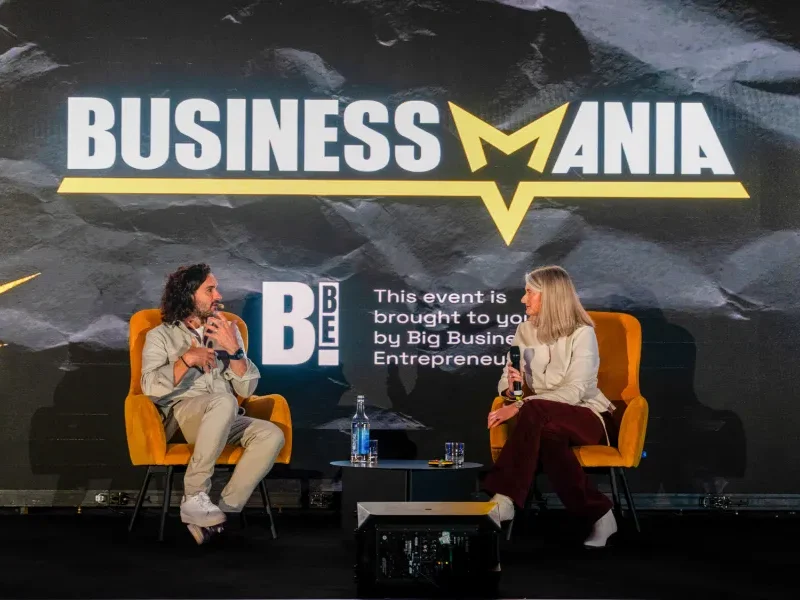 Joe Wicks – The Most Altruistic Business Owner Ever
-
 People Pleasers feel the affects of others poor behaviour the most
-
 Interviewing a Dragon – Sara Davies MBE, "Riddled with Imposter Syndrome starting Dragons' Den"
-
 Interviewing Sarah Willingham – Ex Dragon, Entrepreneur, Founder and CEO of Nightcap and Investor in the Craft Gin Club
-
 Davina McCall – all round inspirational ball of energy
-
 Jason Graystone – Trader and YouTube Expert
-
 Dr Julie Smith – Tik-Tok Psychotherapist & Best Selling Author
-
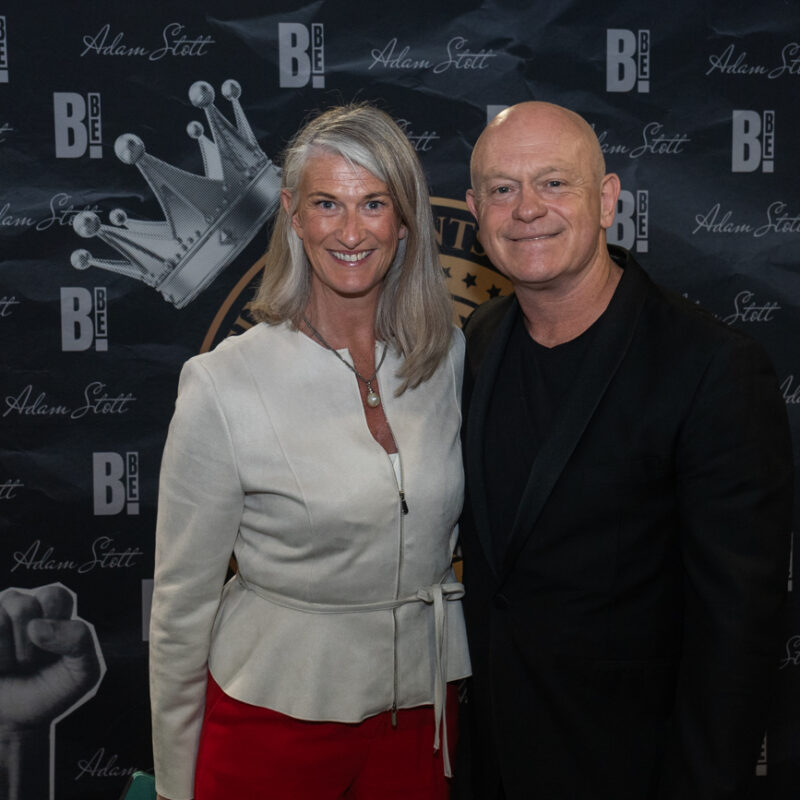 Ross Kemp – Hard Man on and off screen
-
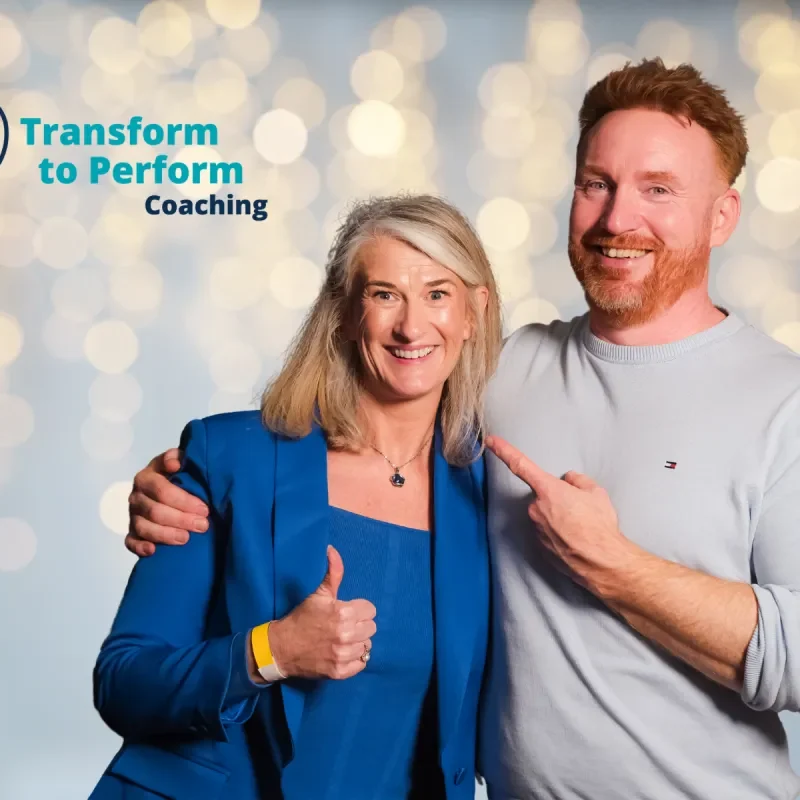 David J.P. Phillips – Most Viewed Ted Talk Speaker Ever
-
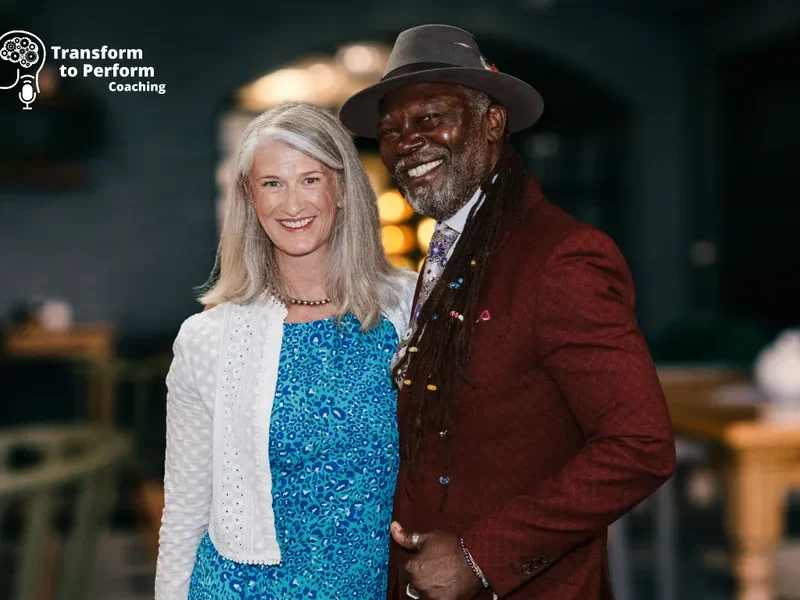 Levi Roots – "Reggae Reggae Sauce Multi-Millionaire!
-
 Jessica Cunningham – Belief Coding and Apprentice star
-
 Lee McQueen & Sian Gabbion – Apprentice Winners
The evidence
What the research says
Is people-pleasing the same thing as genuine care?
No. Psychology research treats them as separate constructs. Heidi Fritz and Vicki Helgeson ran four studies, published in the Journal of Personality and Social Psychology in 1998, distinguishing communion, a positive caring orientation towards other people, from unmitigated communion. The two are correlated, but unmitigated communion is separately associated with a negative view of the self, turning to other people for self-evaluative information, and psychological distress. Their conclusion was that relying on others for self-esteem produces overinvolvement with others and neglect of the self, and that this is what accounts for the distress.
Unmitigated communion is “a focus on others to the exclusion of the self”.
Fritz and Helgeson, Journal of Personality and Social Psychology, 1998, 75(1), 121 to 140
How common is conflict avoidance in UK workplaces?
A quarter of UK employees, an estimated eight million people, had experienced conflict at work in the previous year, according to the CIPD Good Work Index 2024, a survey of 5,496 UK workers. The most common response was not to raise it at all: 47% chose to let it go, compared with 29% who discussed it with a manager or HR, and 1% who took the matter to an employment tribunal.
Does over-accommodating cost senior people anything measurable?
It does. Emily Amanatullah, Michael Morris and Jared Curhan measured unmitigated communion in negotiators and published the results in the Journal of Personality and Social Psychology in 2008. The trait was identifiable within a population of successful business executives, distinct from general agreeableness, and it separately predicted accommodating behaviour in everyday conflicts. In distributive negotiations it lowered the negotiator’s own outcome, and that effect ran through two things: anxiety about relational strain before the negotiation began, and a plan to concede heavily rather than risk an impasse.
What is the wider cost when conflict is avoided rather than addressed?
Acas published its estimate of the cost of workplace conflict in May 2021, prepared by Professor Richard Saundry of the University of Sheffield and Professor Peter Urwin of the University of Westminster. It put the cost of conflict to UK employers at £28.5 billion a year, more than £1,000 for every employee. Close to 10 million people experience conflict at work each year, more than half report stress, anxiety or depression as a result, just under 900,000 take time off work, and nearly half a million resign.
A note on scope. Coaching works on learned patterns and behaviour. It is not a treatment for a diagnosed mental health condition and it does not replace medical care. If you are living with persistent low mood, anxiety, or thoughts of harming yourself, please speak to your GP or a registered clinician. In the UK, Samaritans is free to call on 116 123, day or night.
Sources
- CIPD, Workplace conflict puts strain on job quality for estimated eight million UK workers, Good Work Index 2024.
- Fritz, H. L. and Helgeson, V. S., Distinctions of unmitigated communion from communion: self-neglect and overinvolvement with others, Journal of Personality and Social Psychology, 1998, 75(1), 121 to 140.
- Amanatullah, E. T., Morris, M. W. and Curhan, J. R., Negotiators who give too much: unmitigated communion, relational anxieties, and economic costs in distributive and integrative bargaining, Journal of Personality and Social Psychology, 2008, 95(3), 723 to 738.
- Acas, Workplace conflict: estimating the cost to employers, 11 May 2021.
Questions?
Frequently Asked Questions
-
Is people-pleasing really a coaching issue or is it just my personality?
People-pleasing is not a personality trait. It is a learned pattern, built by specific experiences, and running as an unconscious wiring programme. The fact that it feels like who you are is a feature of how unconscious patterns work: they feel like the self because they have been running so long and so automatically that they are indistinguishable from it. That does not make them fixed. It makes them a good candidate for rewiring.
-
I am a people-pleaser but I also have very high standards. How can both be true?
Very easily. Perfectionism and people-pleasing are closely related patterns, both producing overwork and over-effort from different angles. The perfectionist overworks to meet an impossible standard. The people-pleaser overworks to manage other people’s experience of them. When both are running, the overwork is extreme and the exhaustion tends to compound faster than either pattern alone would produce.
-
Will I lose my warmth or my good relationships if I stop people-pleasing?
No. What you will lose is the compulsive version: the anxiety-driven need to manage other people’s feelings at the expense of your own. The warmth and genuine care for other people are not part of the pattern being removed. They are part of you. What changes is the behaviour that comes from fear rather than from genuine care.
-
How does this affect my team?
In most cases, significantly and positively. A leader who is no longer people-pleasing is a clearer, more consistent, more trustworthy presence. The team does not have to guess which version of their leader they are getting. Decisions are made on their actual merits rather than on who will be least upset by the outcome. Team performance tends to improve as a result.
-
How long has this pattern been running? Can it really be changed at this stage?
The pattern may have been running for most of your life. That does not make it permanent. The neurological pathways that produce it are changeable at any stage in life. Neuroplasticity does not have a cutoff age. What changes with the length of the pattern’s duration is sometimes the complexity of the rewiring work required, which is why the diagnostic process is so important: it identifies exactly what needs to change and at what level.
-
What is "the curse of the strong" and how does it relate to people-pleasing?
The curse of the strong describes the specific dynamic in high-achievers where their capacity to endure pressure, to perform through difficulty, and to absorb other people’s needs allows damaging patterns to run unchallenged for far longer than they should. The strength that looks like a virtue is also the thing that delays the intervention. People-pleasing in strong, high-performing people tends to be particularly invisible because it is masked by what looks like exceptional leadership and genuine care.
-
What do you do about the physical and emotional toll of long-term people-pleasing?
The REWIRE coaching programme addresses the full picture, including the physiological dimension. Long-term people-pleasing produces chronic stress responses in the body that affect energy, focus, and health. The programme includes nutritional support for performance and nervous system regulation as part of the process, recognising that performance, health, and happiness are inseparable.
—
Thirty minutes, one to one with Nicky
Ready to Book Your Reset Call
Share a little about what is going on. Nicky reads every enquiry personally.
No obligation. Confidential. 30 minute call. Fit check for both of us.
Call us: 07795 467090
Email: nicky@transformtoperformcoaching.com
Working across the UK and internationally. One to one work is delivered online, with in-person offered to those who are close or happy to travel. Nicky is happy to discuss travel for corporate engagements.